
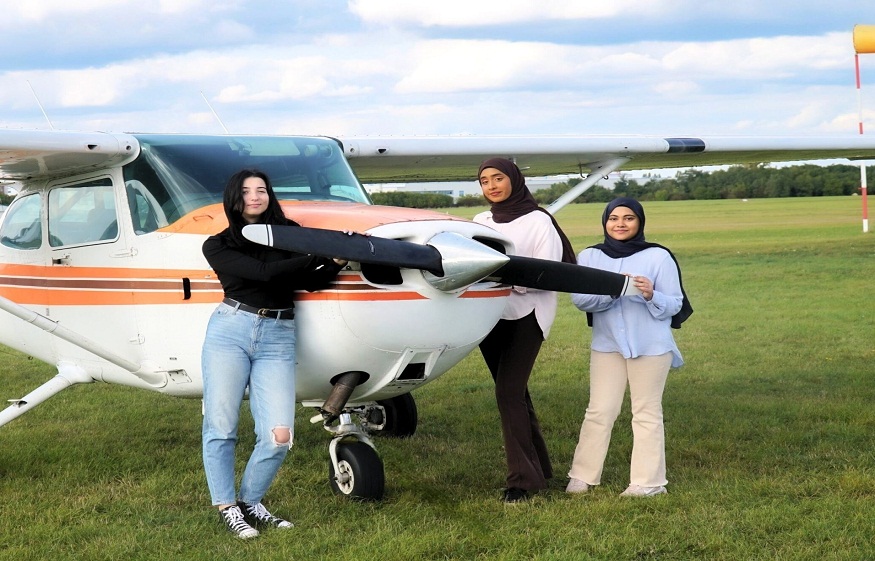
The Roadmap to Becoming a Pilot: A Brief Overview of Airplane Training
From Ground School to Solo Flights: The Stages of Pilot Training
Becoming a pilot is more than just a career choice; it’s a commitment to mastering the complexities of aviation. The journey typically begins with ground school, where prospective pilots learn the foundational concepts of flight theory, aeronautical navigation, meteorology, and regulations that govern aviation. Ground school may be conducted in a traditional classroom setting or through online platforms, providing essential education on the mechanics of flying, including aircraft systems, performance calculations, and emergency procedures.
Once the fundamentals are grasped, students transition to flight training, where they learn to operate aircraft under the guidance of a certified flight instructor (CFI). The training is divided into key phases: dual instruction (flying alongside an instructor) and solo practice (flying alone when deemed ready). Dual flights focus on developing essential skills from takeoff and landing to maneuvering and navigation while solo flights allow students to build confidence and apply what they have learned independently.
Read More : Options can make or break your sales results in 2026
The training culminates in a checkride, where an instructor tests a student’s skills in a flight examination that includes both practical and theoretical components. To succeed, candidates must demonstrate proficiency in operating the aircraft safely and effectively, as well as a solid understanding of aviation regulations and procedures.
The Role of Flight Instructors: Mentors in the Sky
Flight instructors play a pivotal role in a pilot’s journey. These professionals are not only certified pilots themselves, but they also bring a wealth of experience and knowledge to the training process. A good instructor serves as a mentor, guiding students through the complexities of aviation, instilling sound judgment, and fostering a safety-oriented mindset. Instructors prepare students for various flight conditions, instilling the ability to make swift, informed decisions under pressure.
Moreover, building a solid relationship with an instructor can greatly enhance learning. Instructors often employ varied teaching methods tailored to individual learning styles, using simulation, hands-on experience, and verbal debriefing to reinforce concepts. They also help demystify the mental and emotional hurdles involved in flying, equipping students with coping strategies for in-flight challenges. When choosing a flight school, aspiring pilots should consider the experience and teaching philosophy of potential instructors, as this relationship is crucial in fostering a successful training experience.
Understanding Federal Aviation Regulations: What Every Aspiring Pilot Should Know
Federal Aviation Regulations (FARs) are a critical component of piloting knowledge. Established by the Federal Aviation Administration (FAA), these regulations cover a wide array of topics concerning aviation safety, operational standards, and pilot certification guidelines. They dictate everything from licensing requirements, air traffic control procedures, to maintenance protocols for aircraft.
As students progress through their training, understanding FARs becomes increasingly important, shaping their knowledge of how to operate within the legal frameworks and ensuring a commitment to safety. Aspiring pilots must familiarize themselves with the key regulations affecting their license type (e.g., private, commercial, airline transport pilot), as well as regulations specific to their type of operation, including flight hours, medical certifications, and aircraft limitations.
Additionally, staying updated with any changes or amendments to these regulations is essential for all pilots. By understanding the extensive regulatory environment surrounding aviation, future pilots can enhance their preparedness and professionalism, setting a strong foundation for their careers in the sky.
Diving Deep into Flight Theories: Science Meets Art in Aviation
Understanding Aerodynamics: The Physics of Flight Explained
Aerodynamics is the cornerstone of how aircraft operate. Understanding the principles of lift, thrust, drag, and weight is essential for any aspiring pilot, as these forces directly affect an aircraft’s performance. Lift is produced by the flow of air over a wing, an effect that can be quantitatively described by Bernoulli’s principle and Newton’s laws of motion. Pilots must grasp how to manipulate these forces through changes in speed, angle of attack, and control surface deflections to ensure safe and efficient flight.
The study of aerodynamics also encompasses the effects of turbulence and stall conditions, which can significantly impact flight safety. Through structured training in aerodynamics, aspiring pilots learn to predict aircraft behavior under various atmospheric conditions. Understanding this subject creates not only better pilots but also encourages sound decision-making when confronted with adverse conditions during flight.
Navigational Skills: Charting Your Course Through Skies and Regulations
Navigation is a skill that every pilot must master to ensure safe and efficient travel. Traditional navigation tools such as maps and compasses are still relevant, but modern technology has revolutionized how pilots navigate. In-flight navigation now heavily relies on GPS systems, which provide real-time position tracking and can drastically simplify complex flight paths. However, pilots must understand traditional navigation methods for redundancy and in situations where technology may fail.
Beyond mere direction, effective navigation incorporates understanding airspace classifications, appropriate altitude selection, and compliance with air traffic control instructions. Charts are a comprehensive part of this learning process, as pilots must be adept at reading sectional charts, approach plates, and terrain maps to navigate safely and adhere to all regulatory requirements throughout their journey.
Furthermore, understanding alternate routes and emergency landing procedures during flight is vital for maintaining safety. Navigational skills are sharpened through simulation exercises and actual flight training, making them fundamental during the design of effective and responsive flight plans.
Weather Patterns and Their Impact on Flight Safety: Knowledge is Power
Weather is one of the most significant variables a pilot must contend with. Understanding meteorology is crucial for flight safety, as various atmospheric conditions can severely impact aircraft performance and passenger comfort. Aspiring pilots learn to interpret weather reports, charts, and forecasts consistently provided from sources like METAR (Meteorological Aerodrome Report) and TAF (Terminal Aerodrome Forecast) to assess weather conditions before and during flights.
Recognizing phenomena such as thunderstorms, icing, wind shear, and turbulence helps pilots make informed decisions when planning and executing flights. The ability to decipher weather information equips pilots to either safely navigate through challenging conditions or choose to delay or reroute a flight when safety is at risk. This vigilance ensures that learned skills are not just theoretical but are practically and actively applied to uphold safety in aviation.
Moreover, the rise of advanced meteorological software tools and mobile applications enhances a pilot’s ability to receive real-time information and updates, further improving safety. Emphasizing weather patterns and their influence during training prepares pilots to be proactive, adaptive, and able to respond appropriately to dynamic conditions, making it a vital component of any pilot training regimen.
Choosing the Right Airplane Training Course: Your Path to the Skies
Flight Schools vs. Online Courses: Finding the Right Fit for You
When it comes to choosing airplane training courses, aspiring pilots are faced with several options, most notably traditional flight schools and online training programs. Traditional flight schools offer a major advantage through hands-on flight instruction, where students receive immediate feedback from experienced instructors and gain direct access to training aircraft. This immersive, real-world environment is especially valuable in the early stages of learning, as it allows for quick clarification of techniques and concepts, ultimately improving knowledge retention.
On the other hand, online airplane training courses provide a high level of flexibility, enabling learners to study at their own pace and according to their personal schedules. This makes them particularly appealing for individuals balancing work or other responsibilities. Many online platforms feature engaging multimedia content, interactive simulations, and discussion forums that foster a sense of community among students. However, it is important for aspiring pilots to understand the limitations of online-only training particularly the lack of hands-on flight experience, which is essential for developing practical flying skills.
For this reason, many successful pilots choose a hybrid approach to their airplane training courses, completing theoretical ground school online while pursuing in-person flight instruction at a local training center. This balanced method combines the convenience of digital learning with the irreplaceable value of real flight experience, resulting in a more comprehensive and effective training journey.
Evaluating Training Options: Part 61 vs. Part 141 Requirements
In the United States, pilots may train under either Federal Aviation Regulation Part 61 or Part 141, each presenting different structures and requirements. Part 61 provides flexibility, allowing students to learn at their own pace, with requirements tailored to individual needs. It is particularly beneficial for those who plan to engage in flying as a hobby or alongside other commitments. This path allows for potentially less structured, varied hours of instruction based on the student’s progress.
On the other hand, Part 141 schools require a more rigid curriculum and follow a stringent syllabus that must be approved by the FAA. This structured training model offers a clear progression through flight training milestones and is often seen as more rigorous. Consequently, graduates from Part 141 schools may find it easier to transition into advanced training and also qualify for reduced insurance premiums.
When evaluating options, students should consider prerequisites, costs, instructor availability, flight hours, and instructional quality. Ultimately, choosing the right training path involves personal goals, financial considerations, and learning preferences. It’s not only a matter of meeting the regulatory requirements but also ensuring the course mirrors the student’s learning style and professional aspirations.
Cost Considerations: Budgeting for Your Future in Aviation
The costs associated with flying training can vary widely depending on the chosen path, location, aircraft types, and additional factors such as instructor fees and materials. On average, aspiring pilots should expect to spend anywhere from $8,000 to over $20,000 to earn a private pilot license, with more advanced training for commercial applications significantly increasing this figure. The distinction between Part 61 and Part 141 training can also significantly impact the overall financial commitment required.
Prospective pilots are encouraged to create a comprehensive budget that factors in not only training costs but also auxiliary expenses such as exam fees, medical certificates, supplies, and potential flight time overages. Notably, financing options, scholarships, or federal aid may be available through educational institutions or aviation organizations, providing potential financial relief.
Ultimately, investing in flight training is not merely an expenditure; it’s a commitment to personal and professional development. Understanding the various costs involved allows aspiring pilots to prepare adequately, ensuring they have the financial means to complete their training and achieve their aviation dreams.
The Flight Experience: What to Expect During Your Training Journey
Simulator Training: Bridging Theory and Practice in a Controlled Environment
Flight simulators have revolutionized pilot training, enabling students to experience flight concepts in a safe and controlled environment. These sophisticated systems are designed to replicate the aircraft’s cockpit and flight behavior, providing an immersive experience that is invaluable for learning. During simulator sessions, pilots can practice procedures, hone their navigational skills, and test their reaction to emergency situations without the risks associated with real flight.
Simulator training is particularly beneficial for familiarizing students with the aircraft systems and controls before ever taking to the skies. This unique training modality allows for repeated practice and mistake correction, a quality that significantly enhances learning outcomes. Furthermore, simulators can recreate complex scenarios and weather conditions, immersing students in experiences that would take time or be potentially dangerous to recreate in the air.
Especially beneficial is how simulator training can fortify the mental aspect of flying. Aspiring pilots learn to make quicker decisions, proffering strategic thinking and emotional control during simulated crises. All these elements work together to build a foundation for confident, competent, and skilled pilots.
Real Flight Hours: Embracing the Thrill of Actual Flying
Nothing can quite compare to the exhilaration of being in the cockpit of an aircraft. Real flight hours are the crux of any pilot’s training experience, transforming theoretical knowledge into practical realities. Students who embark on solo flights under instructor supervision experience the sheer joy and immense responsibility of being in control of an aircraft, making it one of the most thrilling aspects of flight training. During these hours, they learn the nuances of aircraft handling, decision making, and emergency protocols, all of which are critical skills for future flying endeavors.
The combination of dual lessons with an instructor and solo time reinforces skills and confidence, fostering an authentic feel for flight operations. Each flight provides a unique set of variables, from changing weather conditions to different air traffic scenarios, requiring pilots to adapt and refine their skills continuously. This hands-on approach promotes rapid learning and helps build the resilience needed to handle real-world flying challenges effectively.
Read More : Why Swimming is an Essential Skill for Children
Additionally, accumulating sufficient flight hours is a requirement for progressing toward various pilot licenses and certifications, further emphasizing the importance of these experiences as a pathway to success in achieving aviation goals.
Handling In-Flight Emergencies: Building Confidence and Competence
Emergency management is perhaps one of the most critical components of flight training. Knowing how to react in the event of various in-flight emergencies can mean the difference between life and death. Through structured training methodologies encompassing both simulated and real situations, students learn vital skills, such as how to handle engine failures, navigation system malfunctions, and adverse weather phenomena. Many flight schools integrate emergency protocols into standard lesson plans, emphasizing preparedness as an essential trait for every pilot.
Instructor-led simulations of potential emergencies instill the necessary mindset and tactics for resolving in-flight challenges. Students become adept at analyzing and diagnosing problems swiftly while following established emergency procedures reinforcing a sense of proficiency under pressure. The exposure to these high-stakes scenarios builds confidence, ensuring that pilots emerge from their training prepared to handle real emergencies with competence and calm.
Furthermore, embracing in-flight emergencies within training underscores the aviation industry’s overall culture of safety, as it involves assessing risks, making informed decisions, and executing emergency maneuvers with precision. By prioritizing emergency preparedness, aspiring pilots cultivate a safety-first attitude that benefits not only themselves but also their future passengers.